 StateTick
AI CAD that runs. Claude designed a packing line, and I ran it on real PLCs.
Most AI CAD draws a part. I wanted to know if AI could design a whole machine, program it, test it and run it. Not a render. A machine.
In short: with StateTick, Claude went from a one-line spec to 3D CAD, drawings, control logic, tests, an operator screen and a program running on Schneider PLCs. Here is how it went, step by step, with screenshots from the session.
It started with one sentence
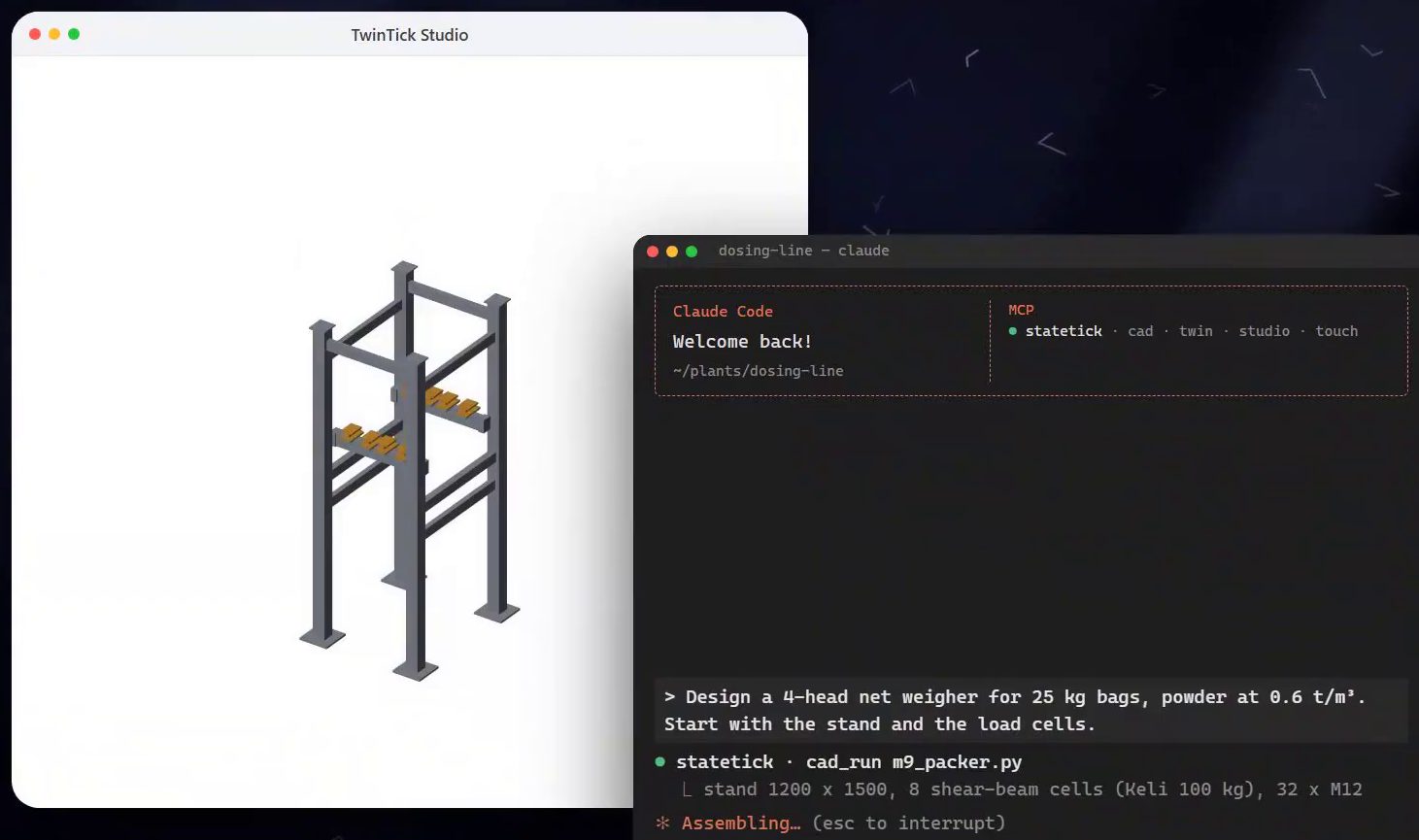
Design a 4-head net weigher for 25 kg bags, powder at 0.6 t/m³. Start with the stand and the load cells.
Claude is connected to StateTick through our MCP server. It drew the stand, picked eight shear-beam load cells and started assembling in TwinTick.
Then I kept talking to it
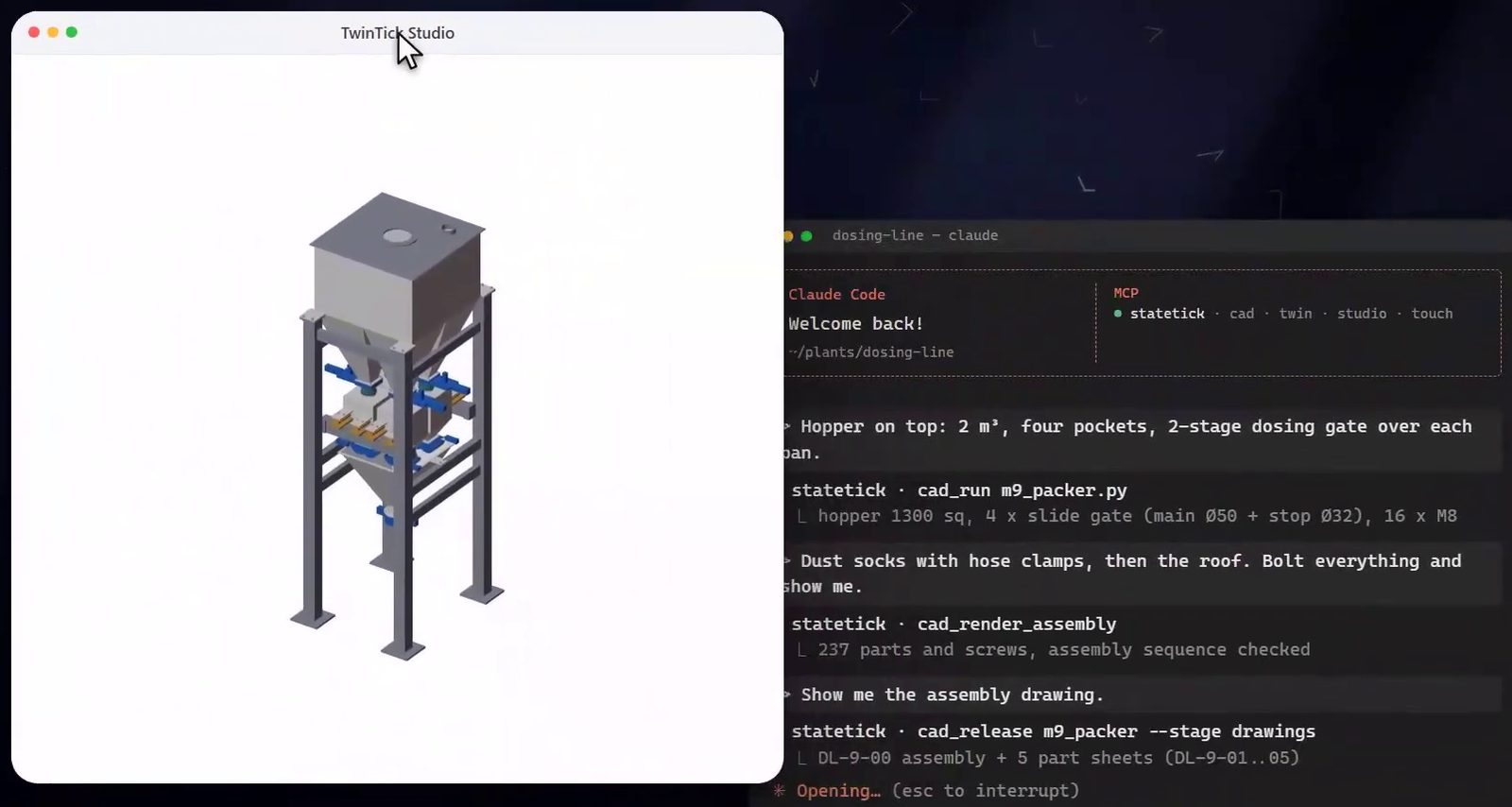
Hopper on top: 2 m³, four pockets, 2-stage dosing gate over each pan.
Dust socks with hose clamps, then the roof. Bolt everything and show me.
Every part goes in where a fitter would put it, and every screw is threaded in. Before showing me anything, it checked the assembly: 237 parts and screws, assembly sequence checked.
Then the drawings
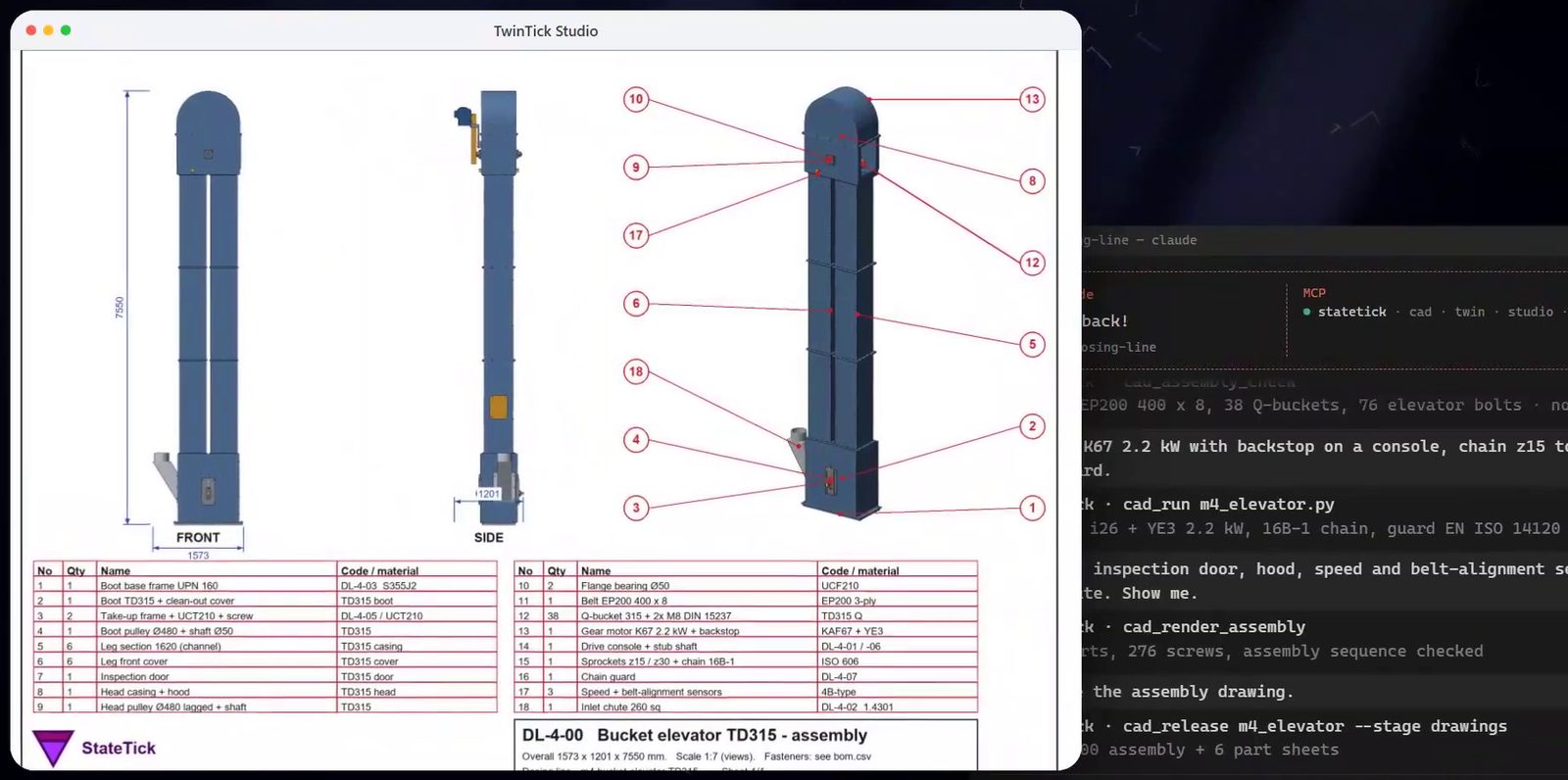
Show me the assembly drawing.
An assembly sheet and part sheets, with a parts list, codes and materials. This one is the bucket elevator that came next: 276 screws, assembly sequence checked.
Then the whole line
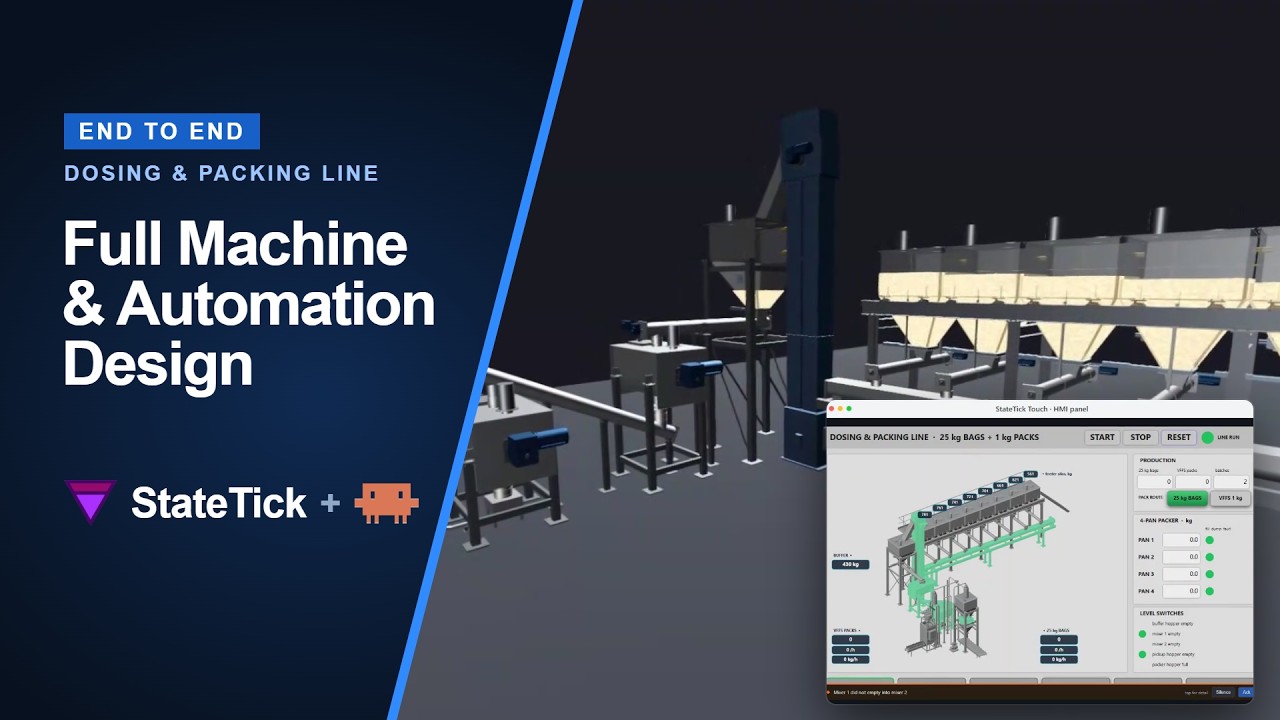
Eight feeder silos on a platform, a collecting screw, the bucket elevator, a buffer silo, two mixers, a vacuum conveyor, the weigher and a form-fill-seal bagger. 17 machines, 4,956 parts.
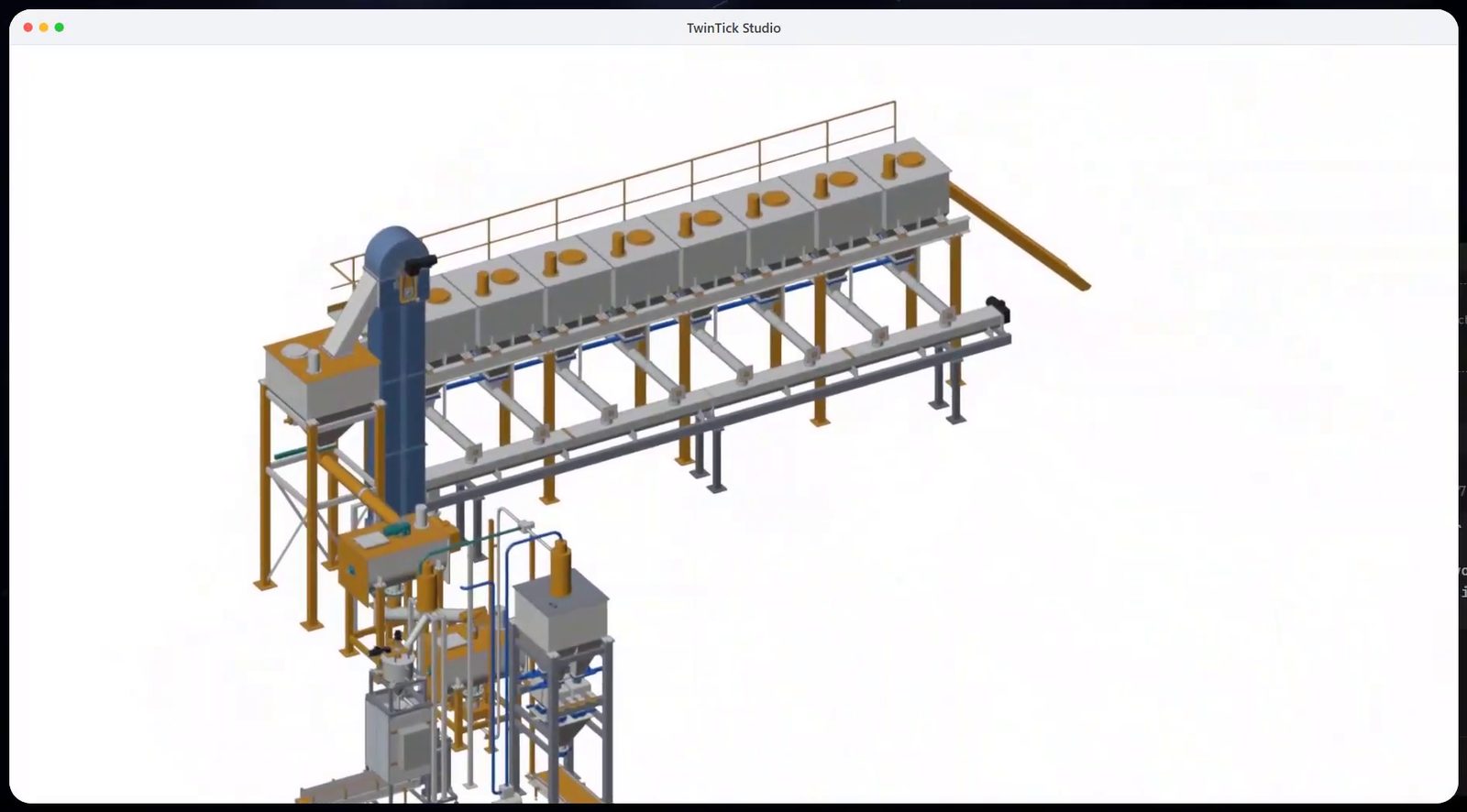
This is where AI CAD usually stops. For a machine builder, it is where the work starts.
Then the machines got a program
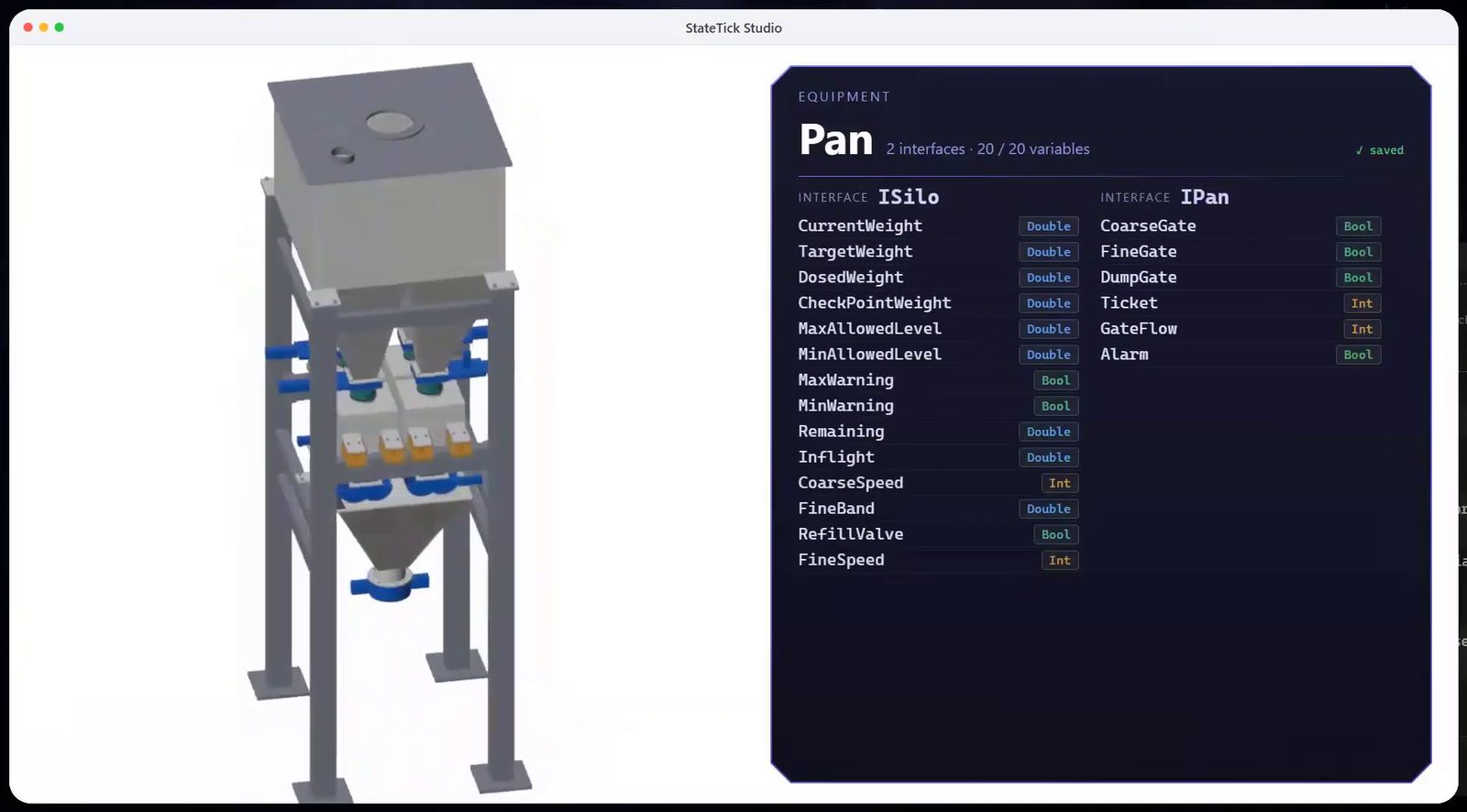
A model doesn’t run a factory. A program does. So every machine became equipment with real signals: weights, gates, levels, alarms. The weighing pan alone has 20 variables.
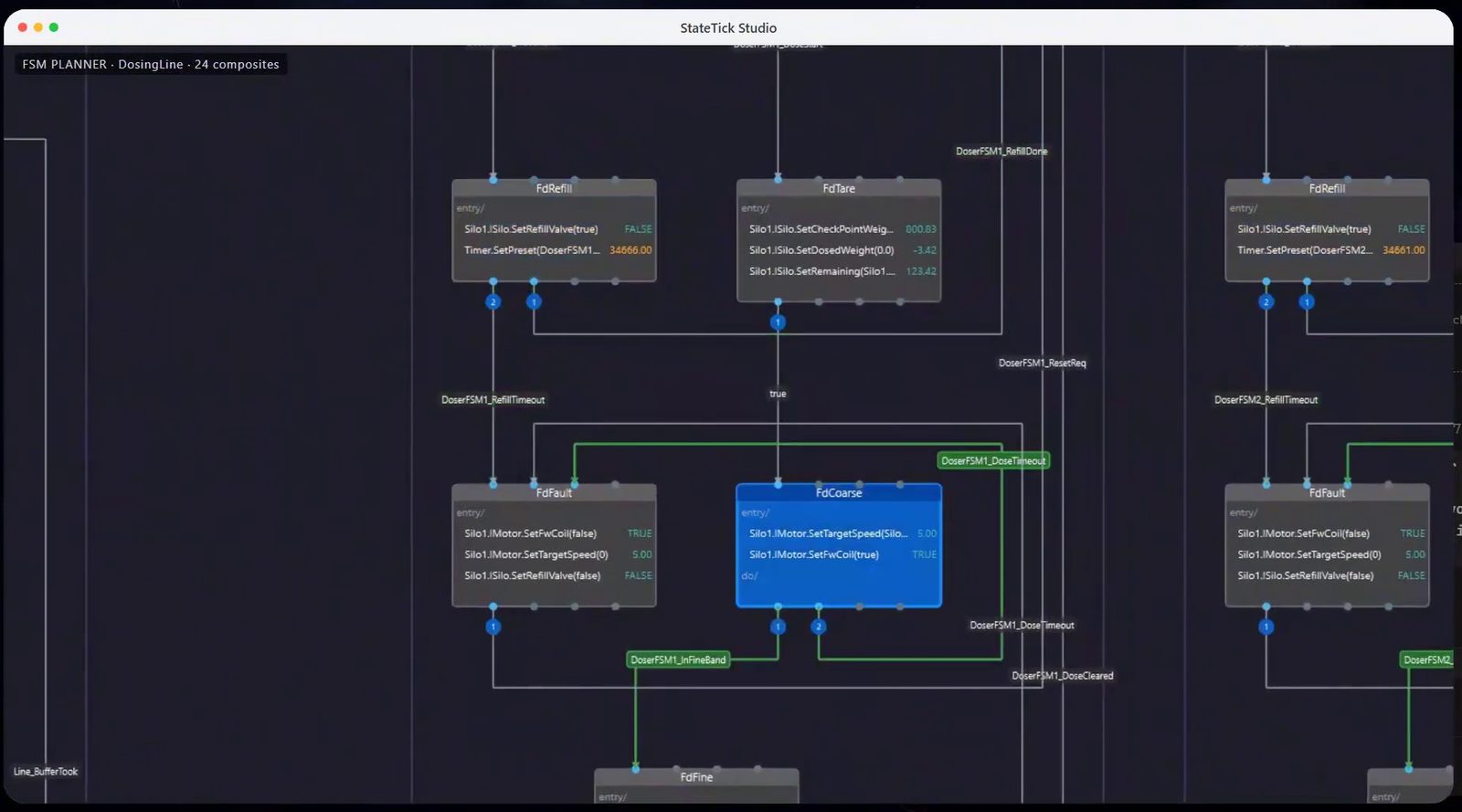
Then the logic: 24 state machines, 196 states, build OK.
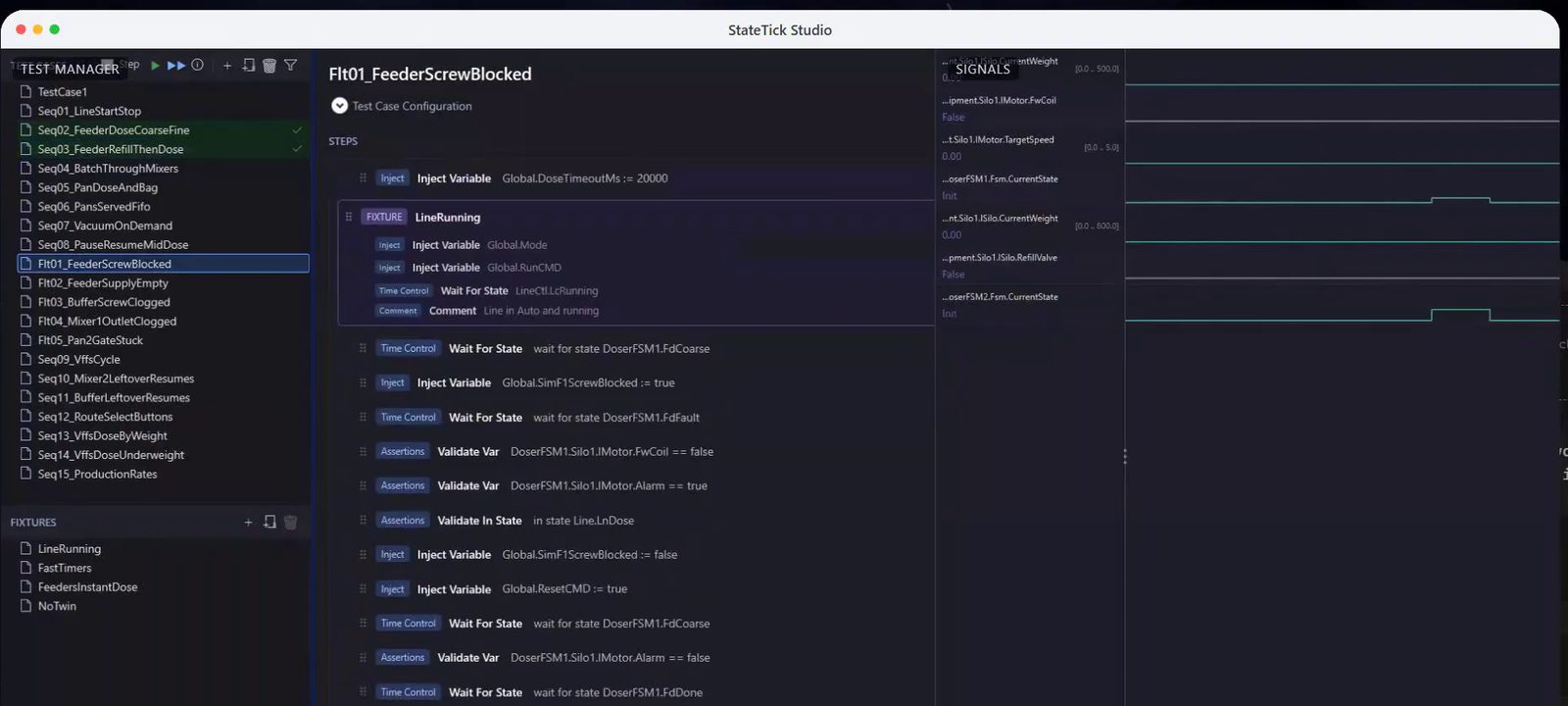
Then the tests. Coarse and fine dosing passed all 17 steps; refill and dose passed 13. Some tests break the machine on purpose, like a blocked feeder screw, and check that the logic notices.
Then the operator screen
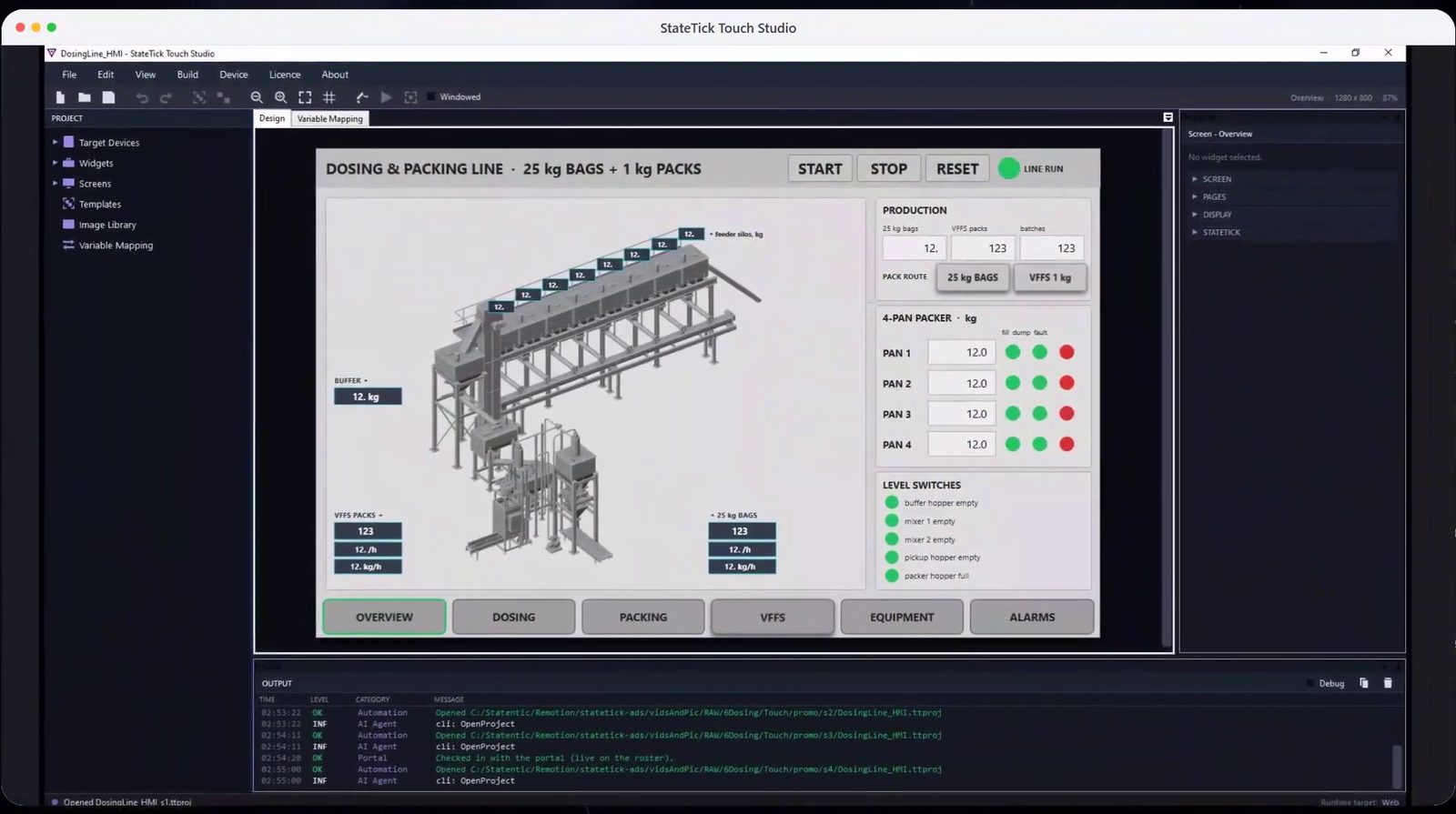
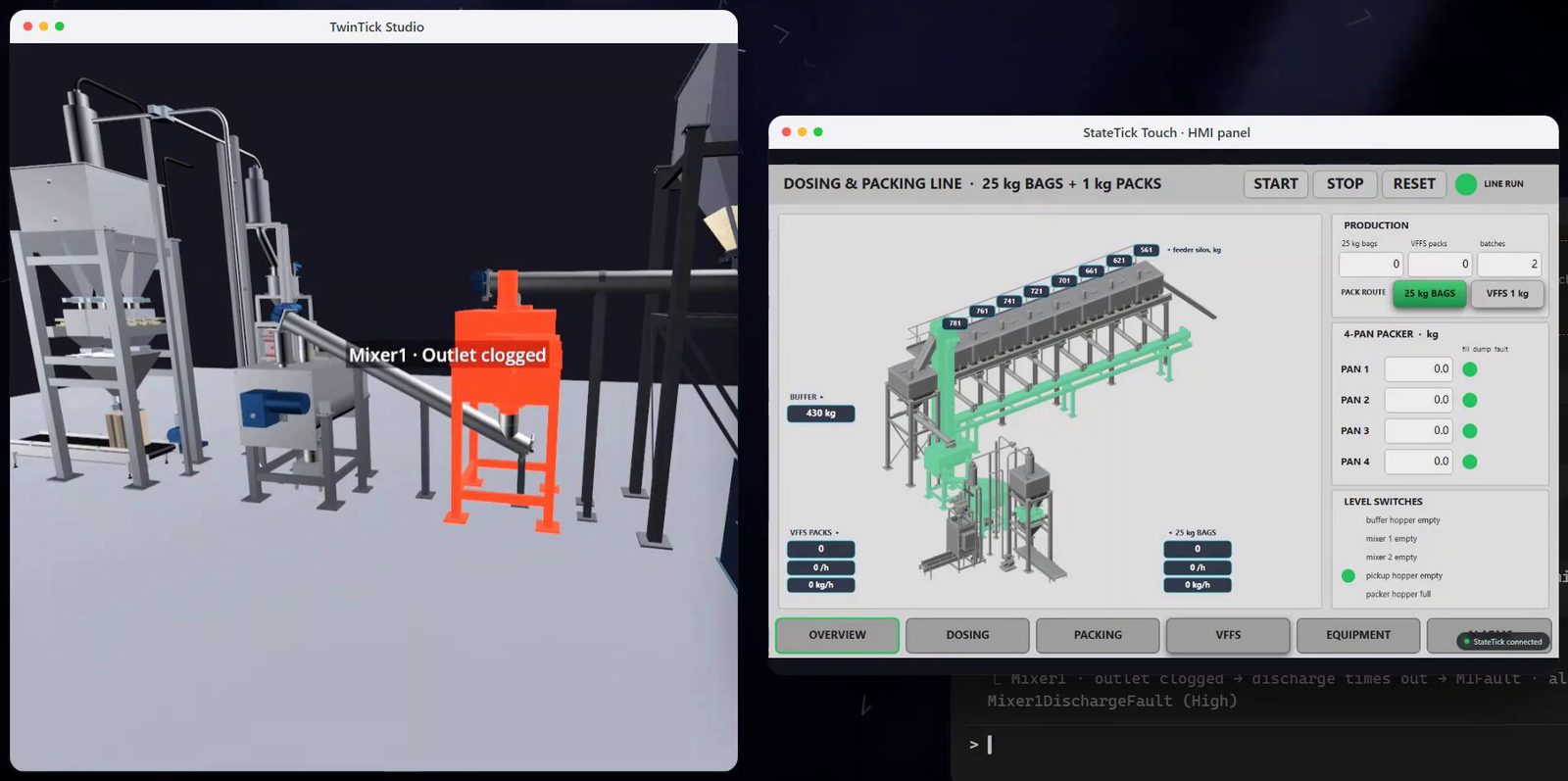
Built in Touch Studio, on the same variables as the logic. Production counters, the four weighing pans, the level switches, and a line picture where each machine turns green when it runs and red on a fault.
Then it ran
The twin started. Four pans weighed 6.25 kg each into 25 kg bags, 24.7 kg on average.
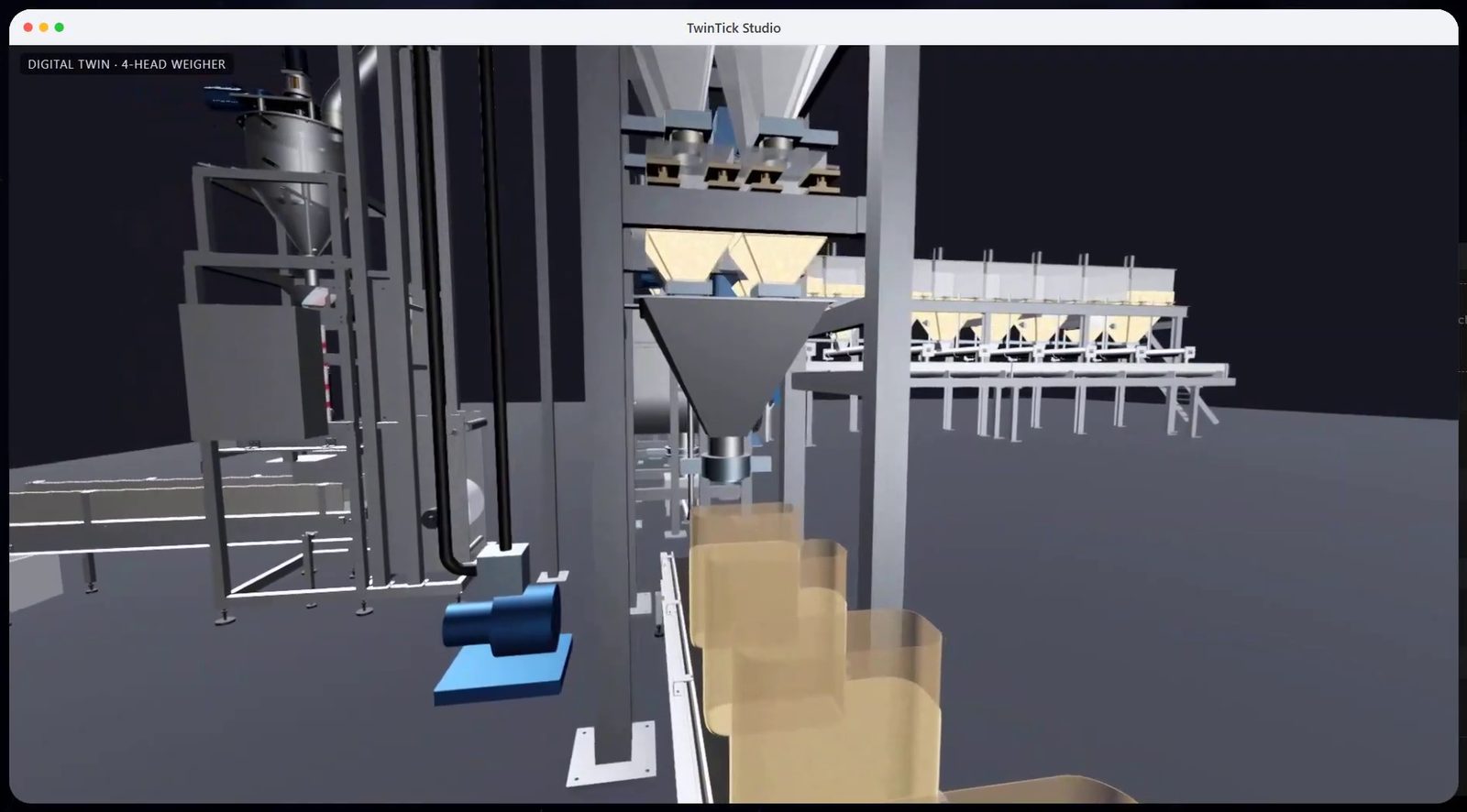
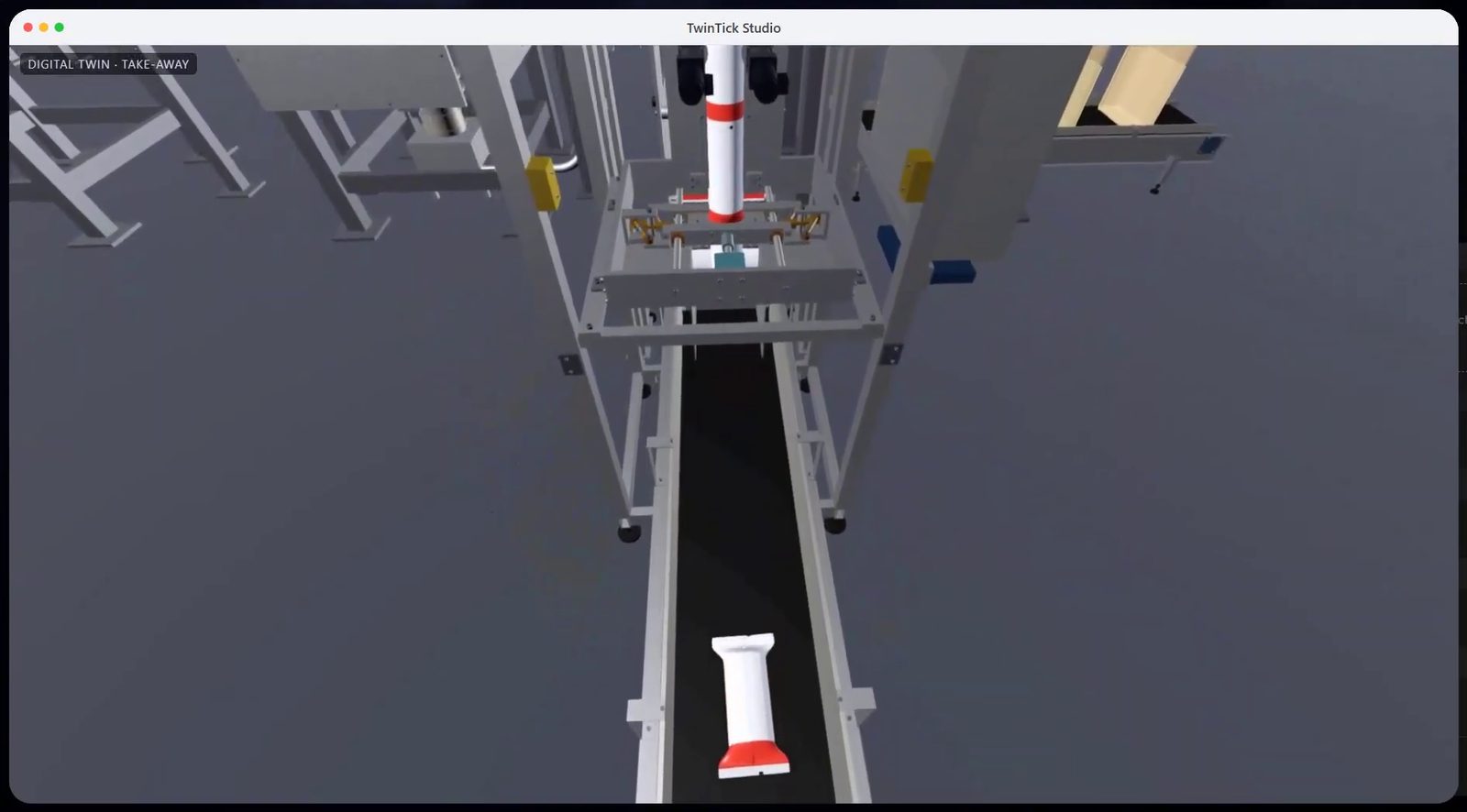
Then I switched the line to 1 kg packs, and the bagger started forming, filling and sealing.
Then I broke it
I clogged the outlet of mixer 1. Nobody told the program. The discharge timed out, the program raised the fault and the HMI showed the alarm. Clear the clog, acknowledge, reset, and the line runs again. This is AI virtual commissioning: the machine is proven against its twin, including the ways it fails, before any steel is cut.
Then real hardware
Claude mapped the I/O to two Schneider Modicon PLCs, an M241 and an M251, over Modbus TCP. It built the program and deployed it to the StateTick Runtime on my PC. 24 of 24 state machines running, I/O exchanged at PLC cycle speed.
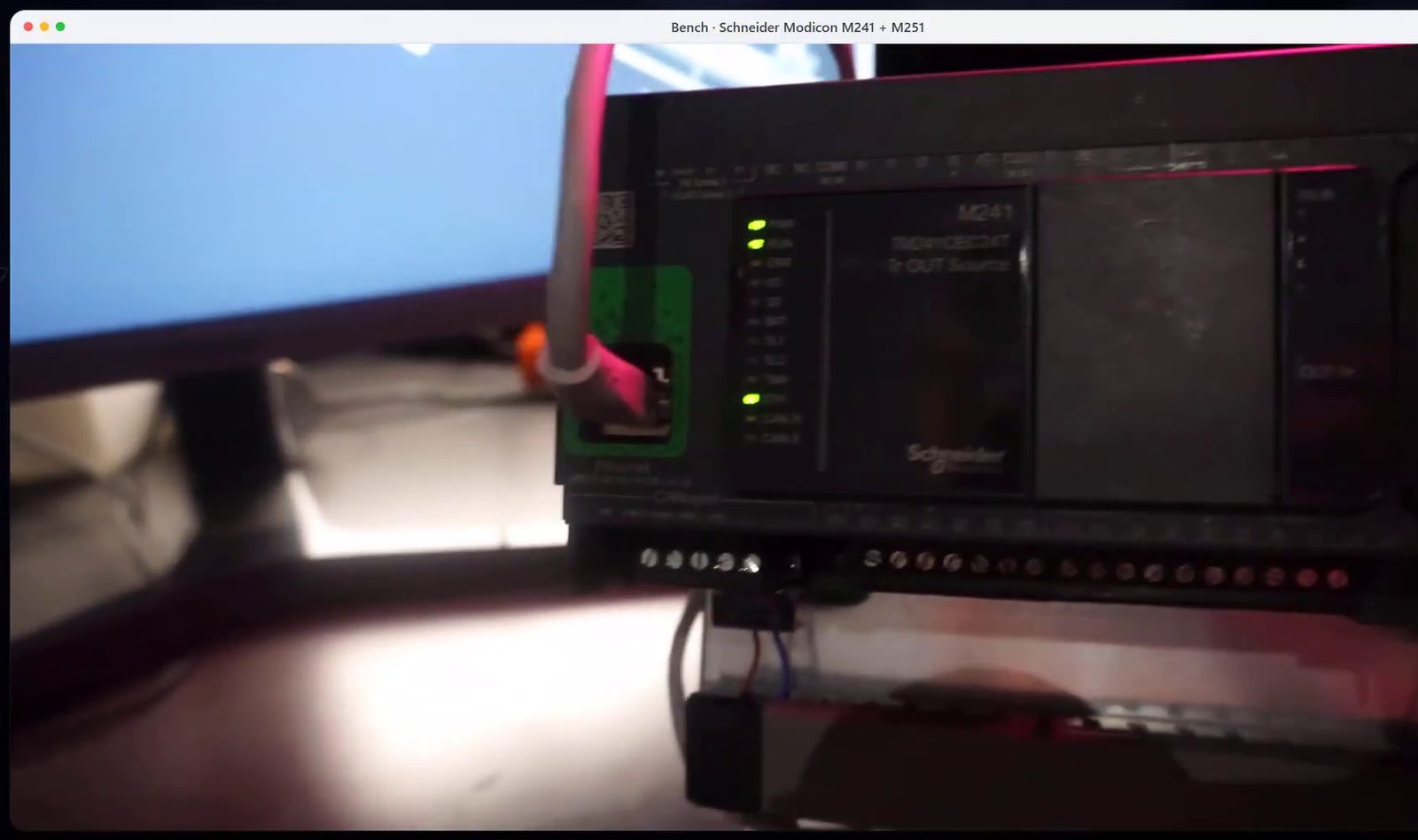
That is what I mean by AI CAD that runs. Not a file. A machine whose program is tested and already talking to real hardware.
Watch the whole thing
This was a few days of work with Claude, cut down to twelve minutes.
Questions people ask
What is AI CAD?
Computer-aided design driven by an AI from a written description. Most AI CAD tools generate parts. With StateTick, the AI designs the whole machine and keeps going into physics, control logic, tests, the HMI and deployment.
Can AI design a complete machine?
Here Claude designed a 17-machine line with 4,956 parts, checked every assembly and produced the drawings. It took a few days, with me giving instructions and reviewing.
What is AI virtual commissioning?
The AI connects the digital twin to the control logic, runs automated tests including injected mechanical faults, and fixes what fails, before the real hardware exists.
Which AI designs the machine?
Claude, through Claude Code, connected to TwinTick, StateTick Studio and Touch Studio via the StateTick MCP server.
Does it run on real hardware?
Yes. Here it ran on the StateTick Runtime on a PC with two Schneider Modicon PLCs over Modbus TCP. StateTick also speaks EtherCAT, OPC UA, serial and raw TCP.
Try it on your own machine
StateTick Studio and Touch Studio are free to use, and TwinTick comes with a 20-day evaluation. Download the suite, then connect Claude over MCP. If you want to see how the faults work, read Beyond the happy path.